
Plan your trip
Getting to a valley off the main map
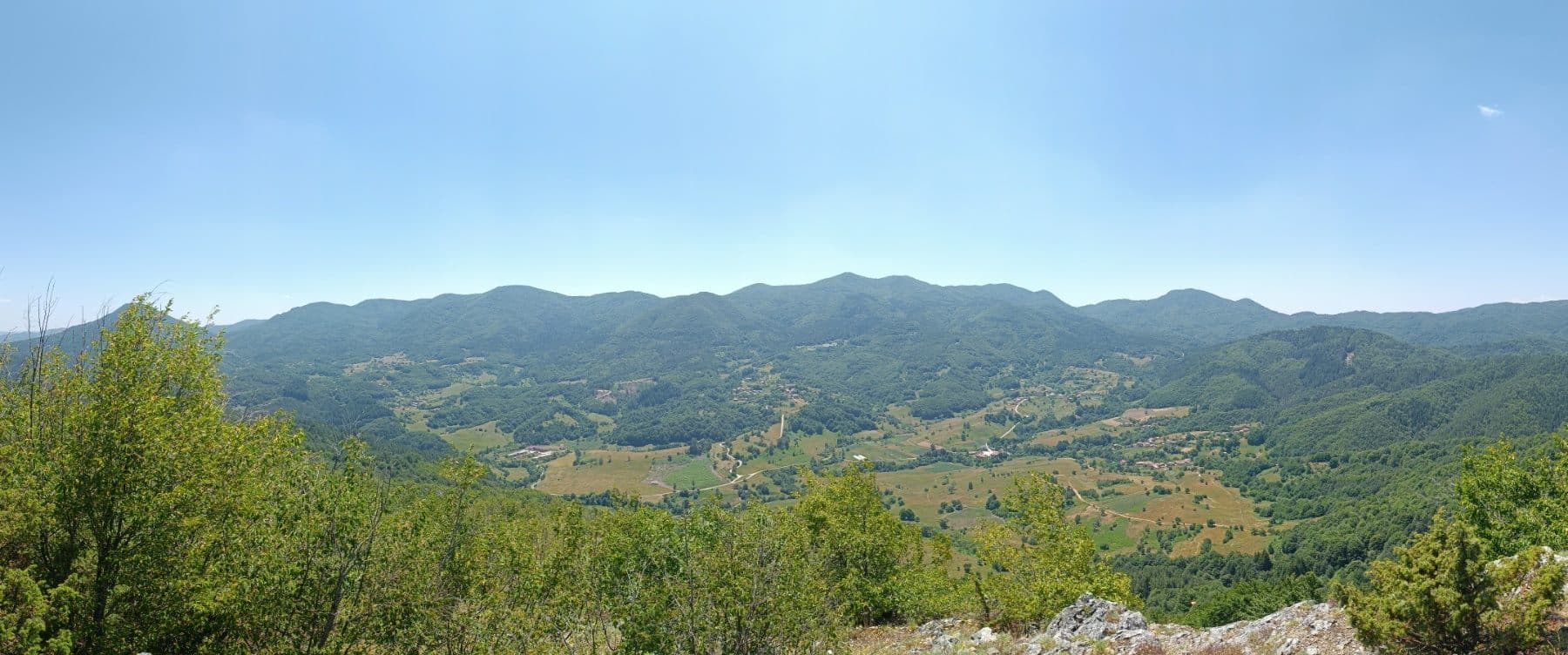
Mogilitsa sits deep in the Western Rhodopes, 26 km south of Smolyan and a few kilometres from the Greek border. Here is how to reach it, when to come, and what to know before you do.
Getting here
Fly into Sofia, then drive south into the mountains
The nearest major airport is Sofia (SOF), Bulgaria's main international gateway, with connections across Europe and beyond. There are no direct transatlantic flights to Bulgaria, so travellers from North America or Australia usually change at a hub such as Frankfurt, Munich, Vienna, Istanbul or London.
From Sofia the drive south starts fast. The first leg to Plovdiv runs on the A1 Trakia motorway, about an hour and a half of easy highway across the plain. At Plovdiv the road leaves the flat country and climbs into the Rhodopes, and the trip changes character entirely: forested ridges, river gorges and long mountain views unfold as you wind down through Smolyan and on to Mogilitsa. Allow around four hours from Sofia, more if you stop for the scenery, which you will.
Plovdiv (PDV) has its own small airport with seasonal low-cost and winter charter flights. If one of its routes fits your dates it drops you closer to the mountains and skips the motorway leg, leaving mostly the scenic drive up from the plain.
Let us drive you in
You do not need to rent a car or navigate mountain roads on your first day. Our guides can collect you straight from the airport, whether you land at Sofia or at Plovdiv, and drive you the rest of the way. We can also meet you at Smolyan or at your guesthouse. Tell us your arrival details when you enquire and we will arrange the pickup.
Arrange a pickupWhen to visit
Good walking from late spring to autumn
Spring (Apr–Jun)
Full rivers and waterfalls, wildflower meadows and green ridges. The Kiselchovo waterfalls tour runs at its best from mid-April to mid-July. Cool mornings, so bring layers.
Summer (Jul–Aug)
Warm, long days and the easiest walking. The high Rhodopes stay cooler than the Bulgarian plain, which makes this a comfortable escape from the summer heat.
Autumn (Sep–Oct)
The quietest and, for many, the finest season. Beech and spruce forests turn colour, the air is clear and the long views from the platforms are at their sharpest.
Winter (Nov–Mar)
Snow and stillness. Some higher routes are limited or closed, but the villages are at their most peaceful. Ask us what is walkable before you plan a winter visit.
Where to stay
Family guesthouses in the villages
Mogilitsa and the villages around it have small, family-run guesthouses rather than hotels. You wake to woodsmoke and home cooking, and your hosts often know the trails as well as the guides do.
Tell us your dates and how you like to travel, and we will point you to places that suit, from a simple village room to a larger house for a group.
What to pack
Mountain weather, plan for layers
- Sturdy hiking boots with ankle support
- Layers: a warm mid-layer plus a waterproof shell, even in summer
- A daypack with water, snacks and sun protection
- Trekking poles if you like them on descents
Good to know
Practical details for foreign visitors
Currency
Bulgaria uses the euro. Cards work in towns; carry some cash for villages and small guesthouses.
Language
Bulgarian is the local language. Our guides speak English, and a few words of greeting go a long way in the villages.
Entry
Bulgaria is in the EU and Schengen area. Travellers from the US, Canada, UK and Australia can visit visa-free for up to 90 days. The EU's ETIAS travel authorisation is expected to begin later in 2026.
Driving
A rental car gives you the most freedom. Non-EU licence holders should carry an International Driving Permit alongside their licence.
Power
Sockets are European Type C and F, 230V. Visitors from North America, the UK and Australia need a plug adapter.
Safety
Crime is low and the villages are welcoming. In the mountains, go with a guide on the unmarked routes and tell someone your plan.